17 of 22
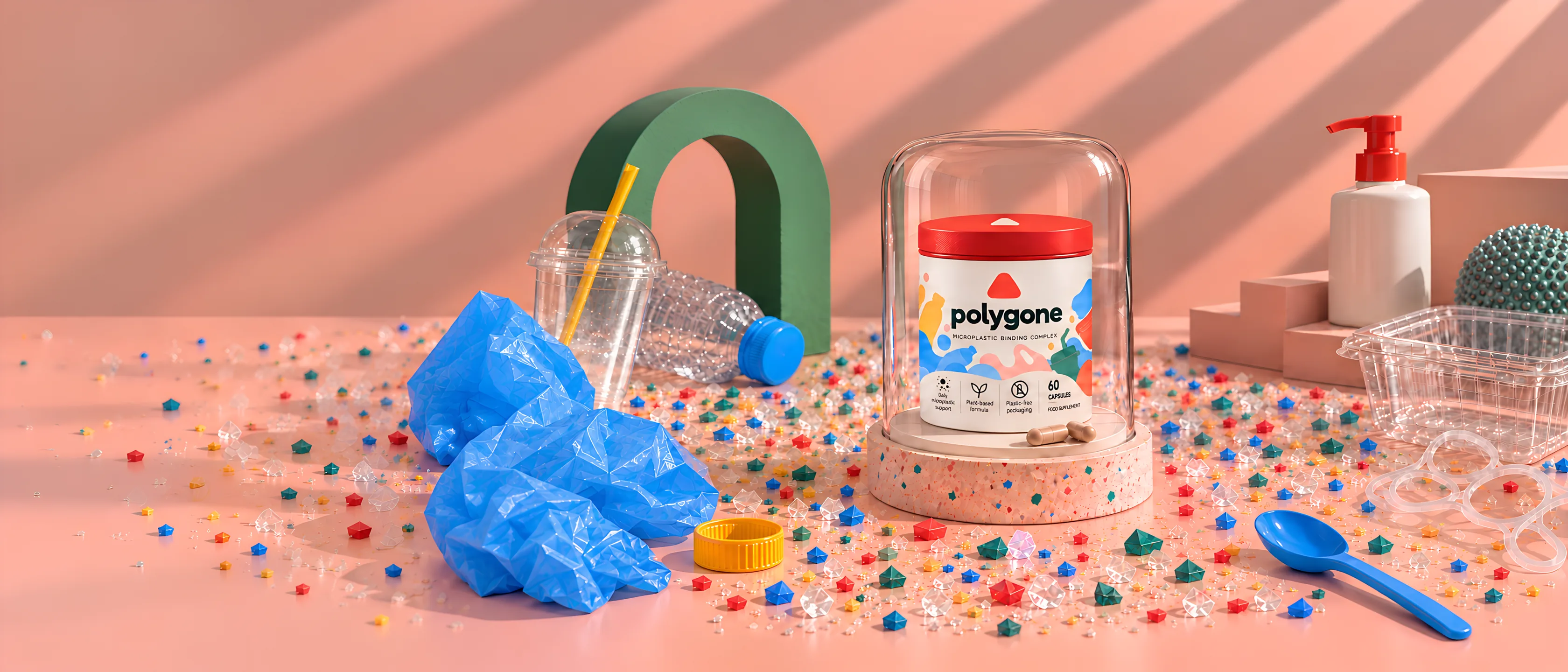
A daily plant-based capsule · 60 per tin
The UK's first microplastic binding supplement.
Polygone is a daily plant-based supplement built around chitosan (made from mushrooms), a natural fibre that binds microplastics in your gut, plus five plant polyphenols. In a plastic-free tin, obviously.
Tiny plastic. Big problem.
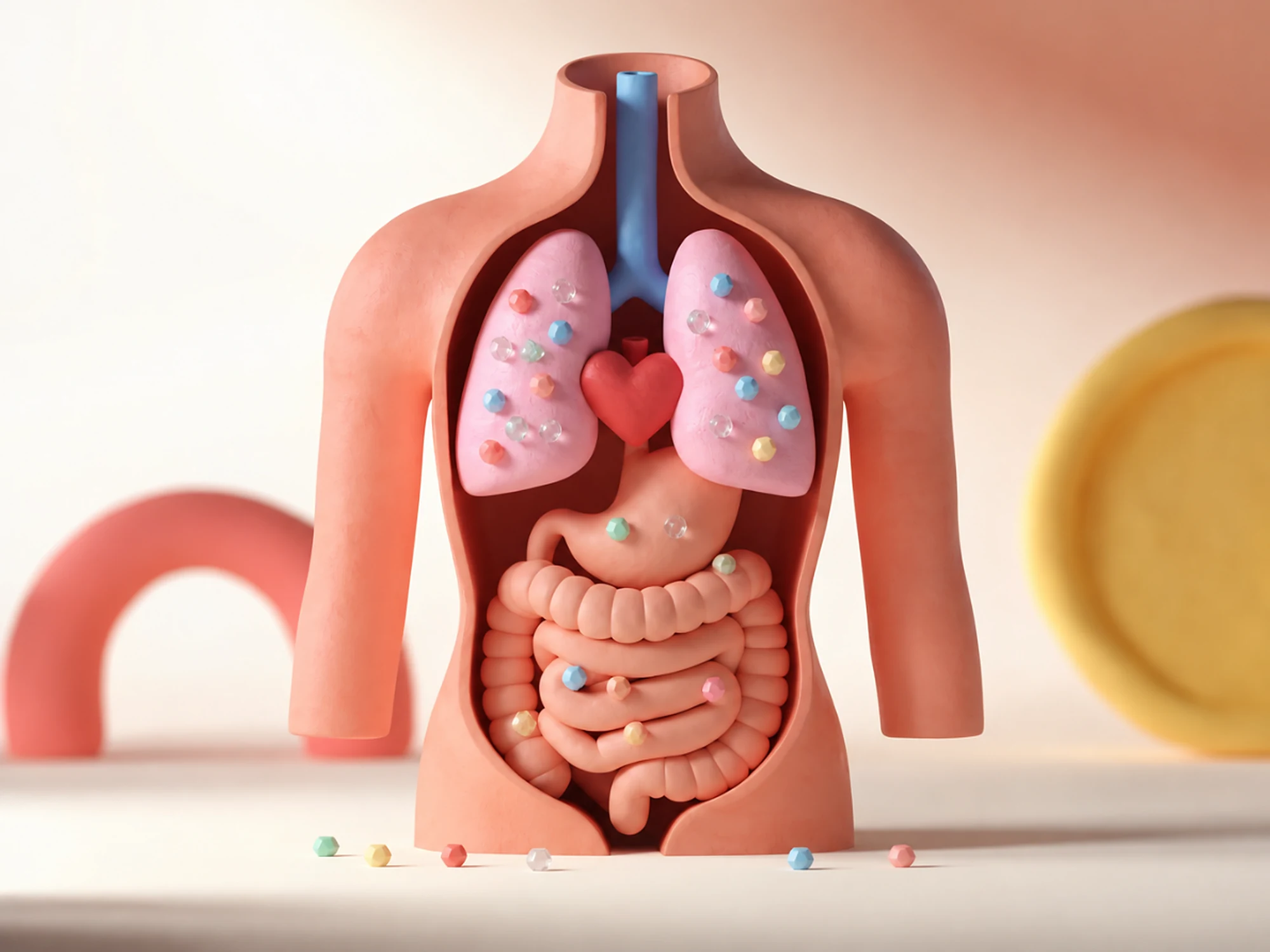
Microplastics are already in us.
Scientists have now found tiny plastic particles in human blood, lungs and even the brain.
11 of 13
lung samples contained microplastics
Jenner et al., 2022~7g
estimated microplastics in the brain, up ~50% since 2016
Nihart et al., 2025How were these measured?
Blood
Amsterdam researchers tested blood from 22 healthy adult donors. PET, the plastic used for drinks bottles, was the most common.
Lungs
A Hull York Medical School team analysed lung tissue from living surgery patients, including the lowest parts of the lungs.
Brain
US researchers measured micro- and nanoplastics in brain samples from 2016 and 2024 and found levels about 50% higher in 2024. The ~7g figure is an estimate based on their average concentration. Other scientists have questioned the measurement method, so treat it as an early signal.
These are small, early studies, and more research is needed to understand what it means for our health. Polygone was not part of these studies.
No complicated rituals
How it works.
Two capsules a day.
Chitosan (made from mushrooms), a natural fibre, is designed to bind particles in the gut so they're carried out naturally.
Five plant polyphenols round out the formula.
The science
What the research says
Chitosan is a natural fibre that forms a gel in the stomach. Three early studies have looked at what happens to microplastics when it's taken with food.
26%
Fewer microplastics measured in blood
11 healthy adults took 0.8g of chitosan a day for 15 days. The microplastics measured in their blood fell by 26% on average. A matched group of 10 who didn't take it saw no significant change.
Cornelli et al., Journal of Xenobiotics, 202647%
More microplastics passed naturally
10 healthy volunteers ate the same standard meal twice, a week apart, the second time with 0.8g of chitosan. Their stool samples contained 47% more microplastic particles on average after the chitosan meal.
Casella et al., Foods, 202550%
Less plastic left in the gut
Rats fed plastic particles for a week kept about half as much in their intestines when chitosan was added to their diet (6% vs 12%). Chitosan outperformed the three other fibres tested.
Liu & Shimizu, Scientific Reports, 2025The straight-up list
What's inside.
- Chitosan (made from mushrooms)
- Five plant polyphenols
- Vegetable capsule
And absolutely not
What's not.
- Shellfish
- Gelatine
- Plastic packaging
- Fillers you don't need
Keep the good bit
Plastic-free, down to the lid.
A steel tin you keep. Plastic-free paper refills that post through your letterbox. Less packaging theatre, more common sense.
tin-topdown.webpImage placeholder · 1 / 1
tin-and-refill.webpImage placeholder · 4 / 3
Simple pricing
Choose your tin.
One-off tin
£34.99
60 capsules · 30 daysBest value
Subscribe & refill
£29.99/month
Founding members: £23.99/month for life (20% off). First 200 subscribers.
Claim a founding spotNo payment now. We'll email you when we launch.
Plant-based
Shellfish-free chitosan
Plastic-free packaging
Made in small batches
Fair questions
The useful bits.
What does Polygone do?
Polygone is built around chitosan, a natural fibre studied for its ability to bind microplastics in the gut, alongside five plant polyphenols.
Is it plant-based?
Yes. The chitosan is made from mushrooms rather than shellfish-derived, and the capsule is plant-based.
Why chitosan from mushrooms?
It gives us a source of chitosan made from mushrooms while avoiding shellfish allergens.
How do I take it?
Take 2 capsules daily with water.
Who shouldn't take it?
If you're pregnant, breastfeeding, taking medication or have a medical condition, please consult your doctor first. For adults.
When do you launch?
Soon. Join the list and you'll be first to know the date.
What does founding member mean?
The first 200 subscribers get 20% off their monthly refill for life, while they remain subscribed.